

Happiness on Trial
The Courtroom of a Wounded Mind

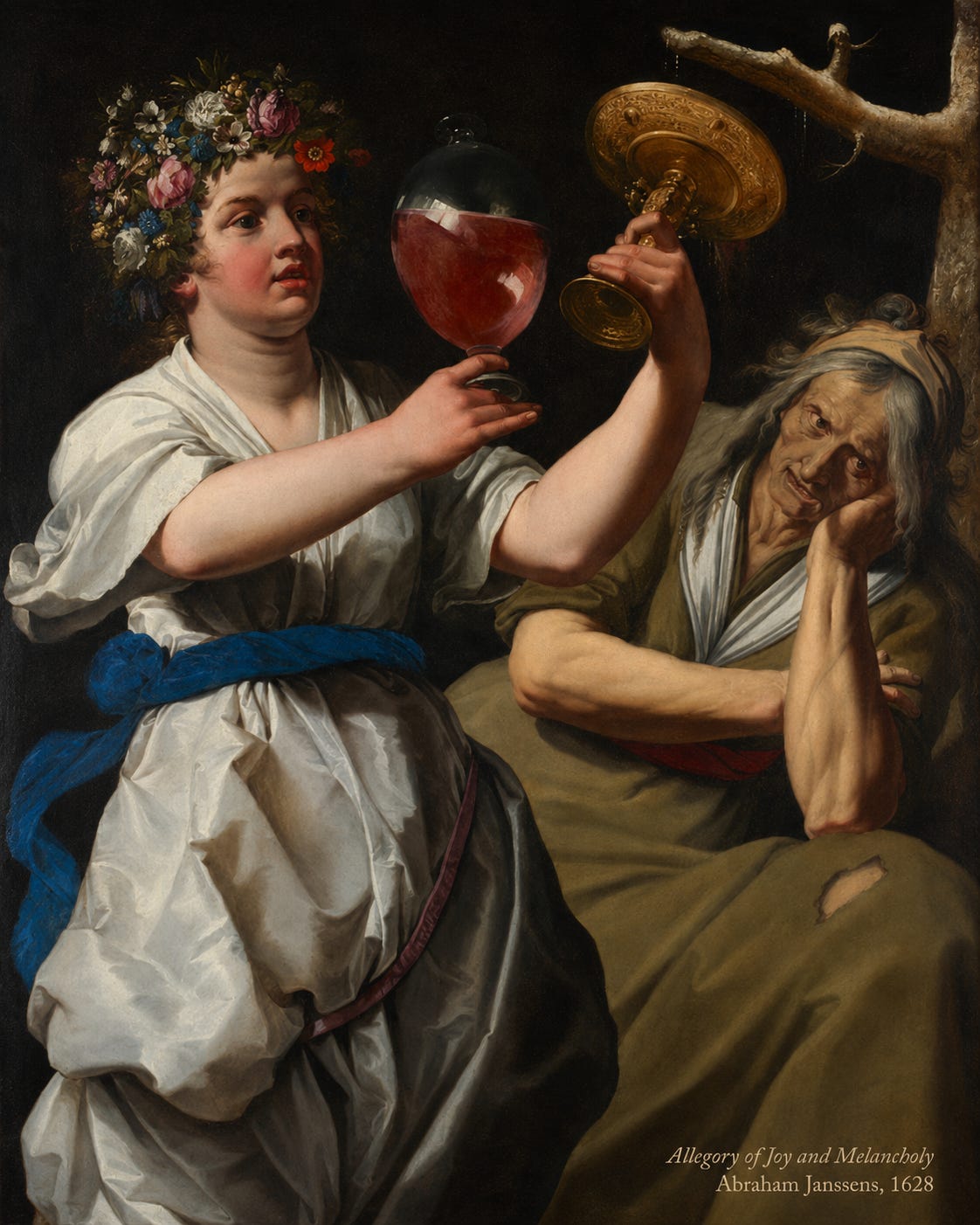
Some people do not fear happiness. They fear recognizing it too late, loving it too much, and missing it before it even leaves.
So when joy arrives, they do what wounded people often do with beautiful things: they ask it to explain itself.
After all, pain has a strange way of making lawyers out of people who only wanted to be loved.
Not the dramatic kind with polished shoes, expensive suits, and a briefcase full of confidence, but the quieter kind. The kind who learns how to cross-examine every gentle thing before it has the chance to mean something. A kind message arrives, and before you even enjoy it, you start wondering what it wants from you. A peaceful day shows up, and instead of resting inside it, you begin checking the sky for consequences. Someone loves you softly, without urgency or performance, and some old, exhausted part of you still asks them to state their case.
The Case Against Joy
“State your purpose,” Pain says.
Happiness looks around the room, almost confused to be there.
“I just came to sit with you for a while.”
“For how long?”
“I don’t know.”
Pain turns immediately to the judge.
“Your Honor, I would like the court to note that the witness cannot guarantee permanence.”
And Fear, who has been sitting in the judge’s seat for far too long, nods like this is a very serious point.
That is the inconvenient intelligence of being hurt. It does not only make you sad. It makes you observant in ways that are useful for surviving but sometimes terrible for living. You start noticing pauses, tones, and tiny changes in someone’s energy before they admit the room has shifted. You become fluent in exits, warning signs, and the particular kind of silence that usually arrives before disappointment. For a while, suspicion feels like wisdom because, to be fair, sometimes it was.
Some people do not reject joy because they are ungrateful. They interrogate it because the last time they trusted something beautiful, it made them feel foolish for believing too early.
Memory Takes the Stand
The prosecution calls Memory to the stand.
Memory walks in with folders, photographs, old messages, half-remembered birthdays, the exact sentence someone used before becoming distant, and every moment where joy made you feel foolish for trusting it too early.
“Do you swear to tell the truth?” Fear asks.
Memory smiles.
“Enough of it.”
And that is the problem with Memory. It rarely lies completely, which is why it can be so persuasive. It tells enough truth to be believed, then edits the rest with confidence. It shows you the moment someone disappointed you, but not always the part where you survived it. It shows you the beginning of the ending, but not always the morning you woke up and realized the world had not ended with them. It shows evidence for caution, but rarely evidence for your own resilience, which feels a little unfair, but Memory has never been known for balanced reporting.
Pain begins gently, because Pain knows how to sound reasonable.
“Have we seen this before?”
Memory opens the first folder.
“Yes.”
“And what happened the last time something good arrived without warning?”
Memory pauses, because the whole truth is more complicated than the question, but courtrooms are not always built for whole truths. Sometimes they are built for winning.
“We were hurt,” Memory says.
Pain nods, satisfied.
“No further questions.”
Happiness Has No Paperwork
By then, Happiness is still standing there without a lawyer, without documents, without some dramatic little presentation proving it deserves a chair. It cannot promise that every person will remain, that every feeling will survive, or that nothing beautiful will ever become complicated. Happiness cannot guarantee forever, and because of that, the wounded mind treats it like a liar.
But the fact that happiness cannot promise permanence does not make it false.
A sunset is not dishonest because it ends. A song is not meaningless because the final note arrives. A good conversation is not fake because eventually someone has to go home. The temporary nature of something does not automatically make it unworthy of being received. Sometimes the fact that it will pass is exactly why it deserves our attention while it is here.
Happiness clears its throat.
“I never said I would last forever.”
Pain smiles.
“Then why should we trust you?”
“I didn’t ask to be trusted forever,” Happiness says. “I only asked not to be punished before I arrive.”
And maybe that is where healing begins, not in becoming someone who never feels afraid again, because that sounds exhausting and honestly a little suspicious, but in the decision to stop making the present answer for every old wound.
This is where the wounded mind gets clever and unfair. It calls prosecution discernment, suspicion wisdom, and fear “being realistic,” which is rude, but unfortunately convincing when you have been hurt before. After a while, the hunting becomes its own kind of heartbreak, because the mind was not built to turn every blessing into a suspect, and the heart was not made to live forever under cross-examination.
Some parts of us only come alive when Fear finally lowers the gavel and admits it has been confusing control with safety.
At some point, the trial stopped being about happiness and became about whether I was willing to live without making every good thing testify first.
The Final Objection
“Are you saying we should let anything in?” Fear asks.
“No,” Wisdom says from the back of the room, where it has been listening quietly the whole time. “I am saying not everything that enters softly is here to harm us.”
The courtroom goes silent.
Maybe that is what we have been waiting for, not for Pain to disappear, Memory to become unreliable, or Fear to abandon its post entirely, but for Wisdom to finally get a seat in the room. Wisdom does not deny what happened, and it does not shame the guarded part of us for becoming guarded. It simply asks whether the same defense that once protected us is now preventing us from receiving the life we survived long enough to meet.
So maybe happiness does not need a formal argument.
It does not need to cite its sources before entering the room. It does not need three witnesses, a timeline, a signed promise, and a perfect explanation for why this time might be different. Maybe some good things are allowed to arrive without becoming a whole investigation: a quiet morning, a kind message, a laugh that escaped before you could make it elegant, a song that found you at the right time, a day that asks nothing from you except your presence.
Pain looks at these things and says, “Is that all?”
And maybe, for once, the answer can be yes.
Yes, that is all.
And maybe all is not as small as we were taught to believe.
I am not trying to become someone who trusts everything. That would not be healing. That would be forgetting. I am trying to become someone who can tell the difference between a warning and an echo. I am trying to stop mistaking every quiet moment for the silence before punishment. I am trying to let joy arrive without immediately asking it to defend itself against people who are not even in the room anymore.
Sometimes I still fail. Sometimes the old lawyer in me rises too quickly, straightens his papers, and prepares the opening statement before happiness has even found a chair. Sometimes Memory walks in uninvited with another folder. Sometimes Fear still looks convincing in the judge’s seat.
But more and more, I am learning to pause before the trial begins.
I notice the cup in my hand. I notice the sunlight. I notice the person who remembered something small about me. I notice the quiet that did not become abandonment. I notice the day that let me rest without asking me to earn it.
And when happiness arrives without a formal argument, I am trying to remember that maybe it was never supposed to argue at all.
Maybe happiness was never asking me to prove it would stay forever.
Maybe it was only asking if I could receive it while it was here.

Subscribe for more creative writing!
I am blown away by the complexity and depth. I don’t enjoy when people try to make complex things more complex, you have made something complex into something reachable. Ingestible. To many. That is wisdom when it is integrated.
What a gift your writing and gaze is.
yessss!! the courtroom metaphor is so unique because it shows how people start analyzing and questioning every good thing before they even allow themselves to enjoy it. i also really loved the contrast between fear, memory, pain, happiness, and wisdom all having their own role.
the ending was probably my favorite part. really amazing piece!